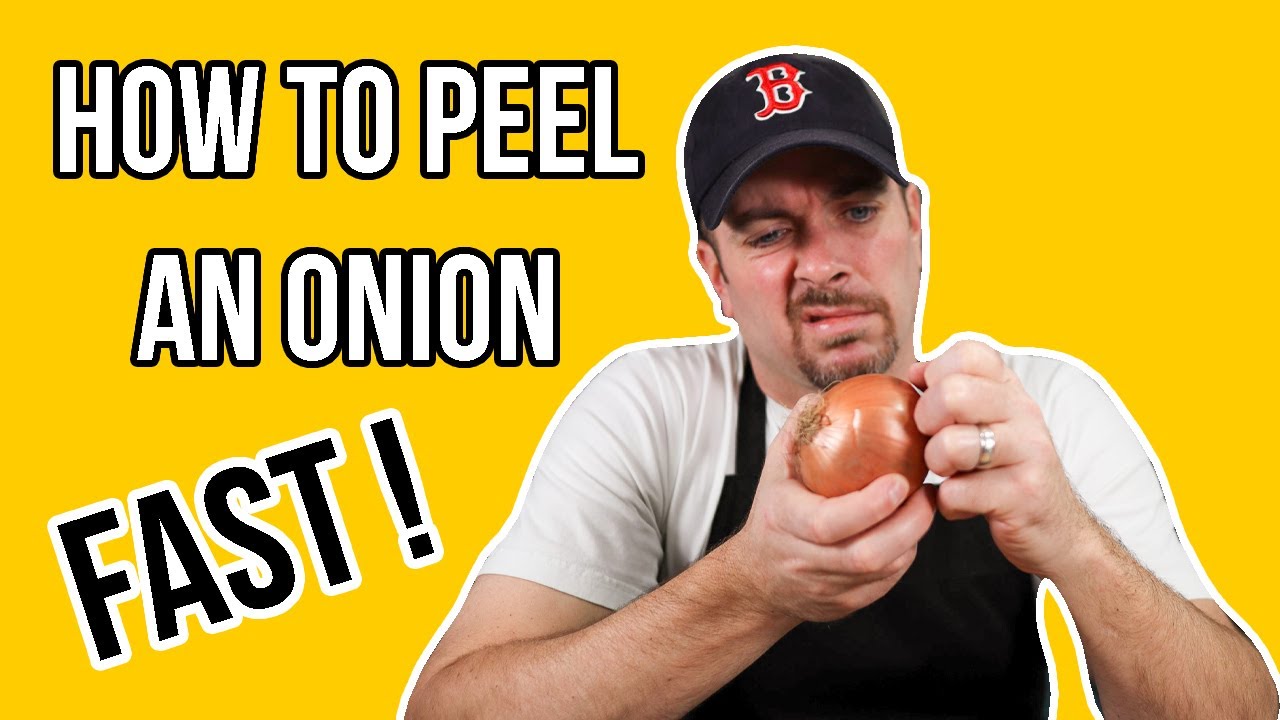
Understanding the Onion's Layers: Why Peeling Matters (and Doesn't)
The humble onion is a cornerstone of global cuisine, providing a foundational layer of flavor to countless dishes. Yet, for many home cooks, the mere thought of preparing one can evoke a groan, often accompanied by inevitable tears. Before you can even begin to master how to cut an onion into perfect dices or elegant slices, you must first confront its protective outer layers. But what exactly counts as the 'peel,' and when is it truly necessary to remove it?
Most of the time, when you're preparing onions to be eaten directly in a dish – whether finely minced for a sauce, diced for a stir-fry, or sliced for a salad – peeling is a non-negotiable step. The papery outer skin and any bruised or dry layers directly underneath are not palatable. They lack the tender texture and sweet-savory flavor we seek, and their inclusion would detract from the overall culinary experience. Think of it as preparing any other vegetable; you wouldn't eat a carrot with its dirt-covered skin, nor an onion with its fibrous, papery exterior.
However, there are specific culinary scenarios where the rules change, and surprisingly, you might find yourself skipping the peel altogether. One common instance is when making stocks or broths. Here, the onion, often halved or quartered, is simmered for an extended period, infusing the liquid with its aromatic compounds. The skin actually contributes a deeper color and additional umami notes to the stock. Since the entire onion, skin and all, will be strained out and discarded after cooking, there's no need to spend time peeling. This approach not only saves time but also maximizes flavor extraction.
Another smart time to leave the peel on is when roasting whole or halved onions. The outer skin acts as a natural protective barrier, shielding the delicate inner layers from scorching in the high heat of the oven. As the onion roasts, the skin helps to trap moisture, resulting in a wonderfully tender interior, and contributes to the beautiful caramelization of the outermost edible layer. Plus, it makes for a much easier cleanup, as the charred skin can simply be peeled away post-roasting, leaving behind perfectly cooked, flavorful onion flesh. Knowing these exceptions can make your kitchen life significantly easier and your dishes more flavorful.
The Step-by-Step Guide to Flawless Onion Peeling
While peeling an onion might seem like a straightforward task, there's a technique to doing it efficiently and effectively, minimizing waste and setting you up for success when it comes time to cut. Follow these steps to prepare your onion like a pro:
Step 1: Prepare the Ends
Begin by placing your onion on a stable cutting board. Identify the root end (the flatter, often dirtier side with stringy bits) and the stem end (the pointier tip). Using a sharp chef's knife, trim off just enough of the root end to remove any dirt or loose strands, but try to keep as much of the root intact as possible. The root end is crucial for holding the onion together during the subsequent cutting process, providing stability. Next, cut off the pointy stem end and discard it. Wipe your knife clean if any dirt transferred from the root.
Step 2: Halve the Onion Lengthwise
With the root end slightly trimmed and the stem end removed, place the onion cut-side down for stability. Now, carefully cut the onion in half lengthwise, right through the middle of the remaining root end. This cut is fundamental as it exposes the layers for easier peeling and prepares the onion for almost any type of cut you'll make next.
Step 3: The Art of Peeling
You now have two onion halves, each with its flat, cut side resting on the board. Peeling both halves at this stage, even if you only plan to use one, can actually make subsequent chopping easier because you're in the zone. To peel, grasp a corner of the papery outer layer near the former stem end. You should feel a slight separation between the dry, papery skin and the first substantial, edible layer of the onion.
- If the skin is cooperative: Firmly pull the papery layer away. It should come off relatively easily, often bringing some of the underlying dry or discolored skin with it.
- If the skin is stubborn: Sometimes, especially with older onions, the skin can be tightly adhered. In this case, gently slide the tip of a small paring knife underneath the edge of the papery skin to pry it up. Once you have a small flap, it should be easier to grasp and pull.
Crucial Tip: Focus on removing only the dry, papery skin and any visibly discolored or bruised layers directly beneath it. Do not peel away large, fresh layers of onion flesh. If some small pieces of paper-thin skin remain near the root end, simply slice off that small area with your knife. The goal is a clean, firm, and fully edible onion half, ready for its next transformation.
Beyond the Peel: Essential Techniques for How to Cut an Onion
Once your onion halves are perfectly peeled and clean, you've completed the vital first step in preparing this versatile vegetable. The intact root end, which you wisely preserved, will now serve as a natural handle, keeping the onion layers together and providing stability as you transition to the actual cutting. This stability is absolutely crucial for safe and uniform cuts, whether you're aiming for a delicate mince, a classic dice, or elegant slices.
Peeling properly sets the stage for a range of essential knife skills. For instance, to slice an onion, you'll simply place a peeled half cut-side down and make parallel cuts from the stem end towards the root. For dicing or mincing, a series of horizontal and vertical cuts into the onion half, again leveraging the root end to hold everything in place, will yield perfect, uniform pieces. Each specific cut serves a different culinary purpose, from adding texture to a salad to melting seamlessly into a sauce.
Mastering these techniques will not only elevate your cooking but also make the process more enjoyable and efficient. If you're eager to dive deeper into the nuances of various onion cuts, from the precise dimensions of a fine dice to the elongated beauty of a slice, our detailed guide on Master Onion Cutting: Slice, Dice, Mince & Stop Crying provides comprehensive instructions and tips for achieving professional results every time.
Tear-Free Triumph: Our Top Tips for Cutting Onions
Beyond the fundamental skill of peeling, the most common apprehension associated with onions is the dreaded tear-jerking effect. It's a universal experience, and the internet abounds with anecdotal remedies, from lighting matches to holding bread in your mouth. While many of these are charming kitchen myths, Food Network Kitchen's extensive testing has identified two truly effective methods to keep the tears at bay, allowing you to focus on how to cut an onion without watery distractions.
Method 1: The Power of a Sharp Knife
This is arguably the simplest and most impactful tip: always use a really sharp knife. A finely honed blade glides through the onion's cells cleanly and efficiently, causing minimal damage. When onion cells are bruised or crushed by a dull knife, they release more of the sulfenic acids and enzymes that combine to form the volatile compounds responsible for irritating your eyes. A sharp knife means less cellular trauma, less chemical release, and therefore, fewer tears. Plus, a sharp knife makes the entire cutting process faster, safer, and much more enjoyable.
Method 2: Chill Out with the Freezer
The second highly effective method involves a brief stint in the freezer. Pop your whole onion into the freezer for about 10-15 minutes before you plan to cut it. The cold temperature slows down the chemical reaction that produces the tear-inducing compounds. Crucially, this brief freezing period doesn't alter the flavor or texture of the onion at all, making it a perfectly viable strategy for any dish. It simply reduces the amount of irritant released into the air as you work.
For even more insights and expert advice on combating those onion-induced tears, including a deeper dive into the science behind it, be sure to check out our dedicated article: How to Cut Onions Without Tears: Food Network's Best Tips. Combining a sharp knife with a chilled onion, perhaps even with good ventilation in your kitchen, will equip you to tackle any onion prep with confidence and dry eyes.
Smart Storage: Keeping Your Cut Onions Fresh
Sometimes, you only need half an onion, or you've prepped a large batch for future meals. Proper storage is key to maintaining freshness and preventing flavor degradation. Once an onion has been cut, its shelf life significantly decreases, and it can start to lose its pungency or develop off-flavors if not stored correctly.
The best way to store leftover cut onion is in an airtight container in the refrigerator. This minimizes exposure to air, which can accelerate spoilage, and also contains the onion's strong odors, preventing them from permeating other foods in your fridge. A tightly sealed plastic container or a glass container with a lid works perfectly. Cut onions stored this way will typically last for 3-5 days. Beyond that, they might begin to soften, dry out, or develop an unappealing metallic taste. For longer storage, chopped onions can also be frozen in an airtight freezer bag for several months, though their texture will soften significantly upon thawing, making them best suited for cooked dishes rather than raw applications.
Conclusion
From understanding when to peel and when to embrace the skin, to mastering the precise technique for removing the outer layers, and finally, to equipping yourself with tear-free strategies, preparing an onion is a foundational culinary skill. Peeling an onion correctly is more than just a chore; it's the crucial first step that ensures a clean, stable base for any cutting method that follows. By adopting these expert tips and techniques, you'll not only enhance your efficiency and safety in the kitchen but also elevate the flavor and presentation of every dish you create. So, arm yourself with a sharp knife, maybe chill that onion, and confidently tackle this essential ingredient, knowing you're well on your way to becoming an onion-cutting master.
